
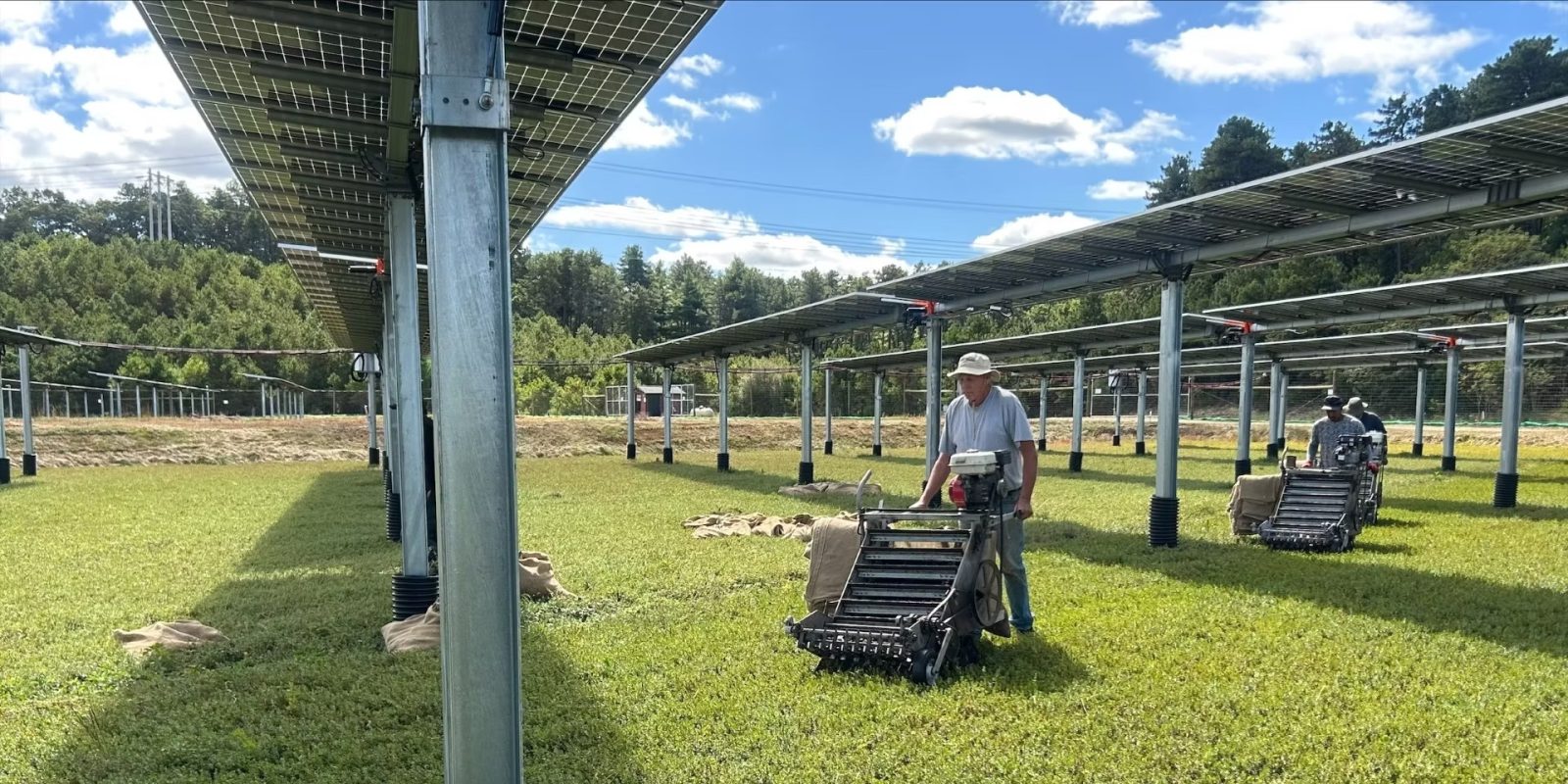
Two cranberry bogs in Massachusetts that had stopped producing berries are back in cultivation, with solar panels installed above the vines helping cover the cost of running them. The farms had been abandoned because growing cranberries there no longer made financial sense, and the panels are now generating a second stream of income that makes the land worth working again.
Cranberry bogs are expensive to maintain even when they are productive. The beds need water management, sanding, weeding and careful harvesting, and prices for the fruit swing widely from year to year. When returns fall, small operations are often left with land that is difficult to convert to anything else, since a working bog is essentially a managed wetland rather than a conventional field.
The arrangement belongs to a broader category of dual-use solar, sometimes called agrivoltaics, in which panels are raised and spaced so that farming can continue underneath rather than being displaced. The goal is not simply to keep the crop alive but to change the economics around it, using steadier energy revenue to offset the volatility of a single commodity.
That balance matters well beyond New England. As countries expand renewable generation, the question of where to put panels becomes as important as how many to build, and farmland is frequently the easiest place to




Comments (0)
No comments yet. Be the first to comment.