
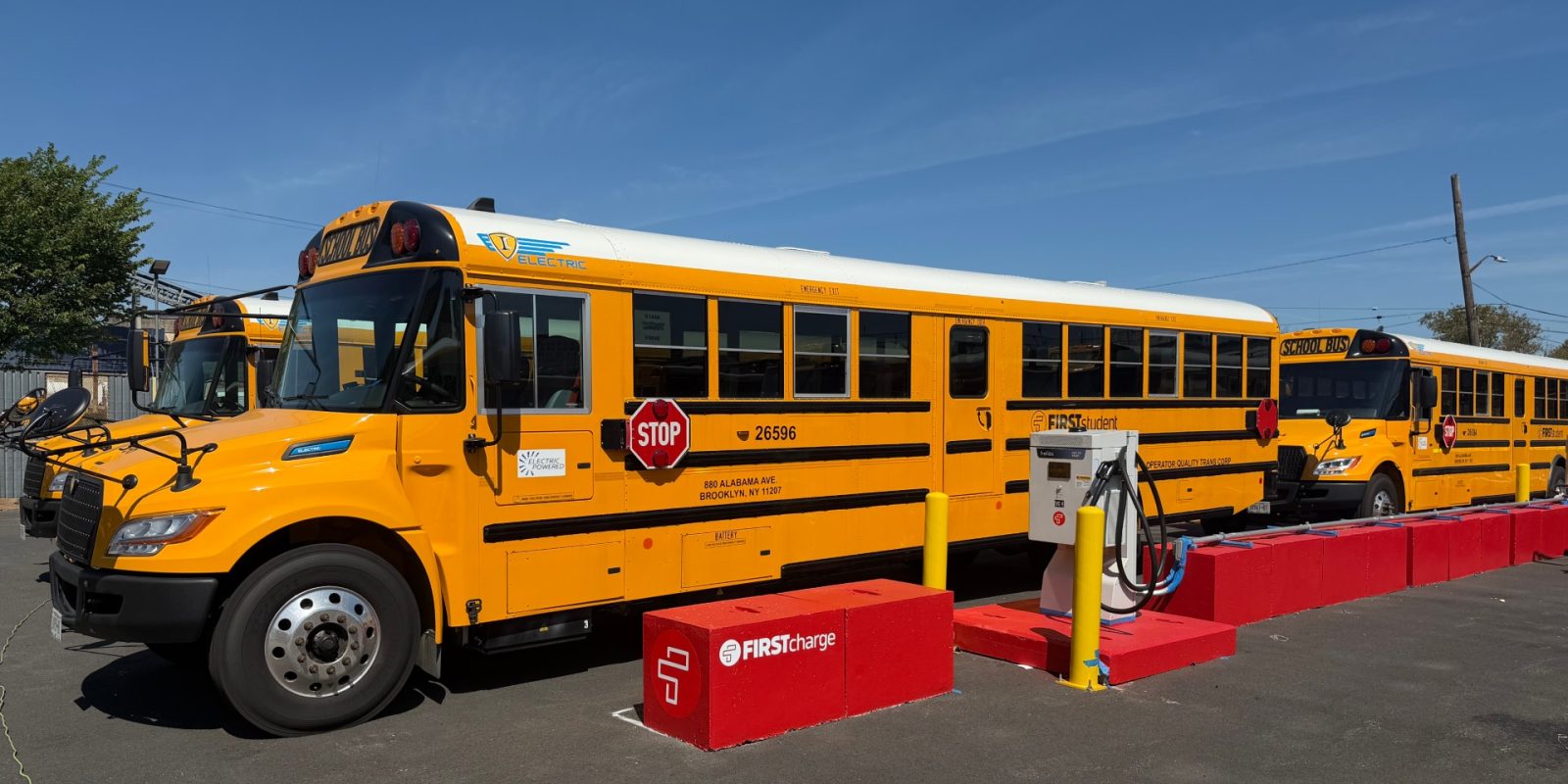
First Student is expanding its electric school bus fleet in New York City with 40 additional vehicles, after wrapping up the first phase of a charging project that trimmed infrastructure costs by 20 percent. The figure matters because charging hardware, not the buses themselves, is often what makes or breaks a fleet's switch to electric power.
The money-saving angle comes from how the charging was planned and built rather than from any single piece of equipment. Spreading the cost of grid connections, depot wiring and power management across a larger number of vehicles lowers the per-bus burden, which is the same logic fleet operators in Saudi Arabia would need to apply if electric buses are to make commercial sense here.
In the electric bus segment, buyers in the Kingdom already see options from Chinese manufacturers such as BYD and Yutong, alongside European commercial-vehicle brands that have been adding battery-electric models. Most of these have arrived through municipal transport, airport shuttle and Hajj and Umrah service contracts rather than through school transport, which remains dominated by diesel and, in some cases, petrol-powered minibuses.
For Saudi fleet managers watching this trend, the practical questions are less about the badge on the grille and more about the depot. Charging capacity, grid connections and the cost of upgrading a site often outweigh the sticker price of the vehicles themselves.
Operators should also weigh how battery range holds up under extreme summer heat with air conditioning running at full load, since cooling demand can cut into usable range. Service network coverage, spare parts availability and battery warranty terms matter just as much.
School and shuttle fleets are rarely replaced all at once, so a staged rollout with charging built ahead of demand, as First Student appears to be doing, is a sensible template to study.

Comments (0)
No comments yet. Be the first to comment.