
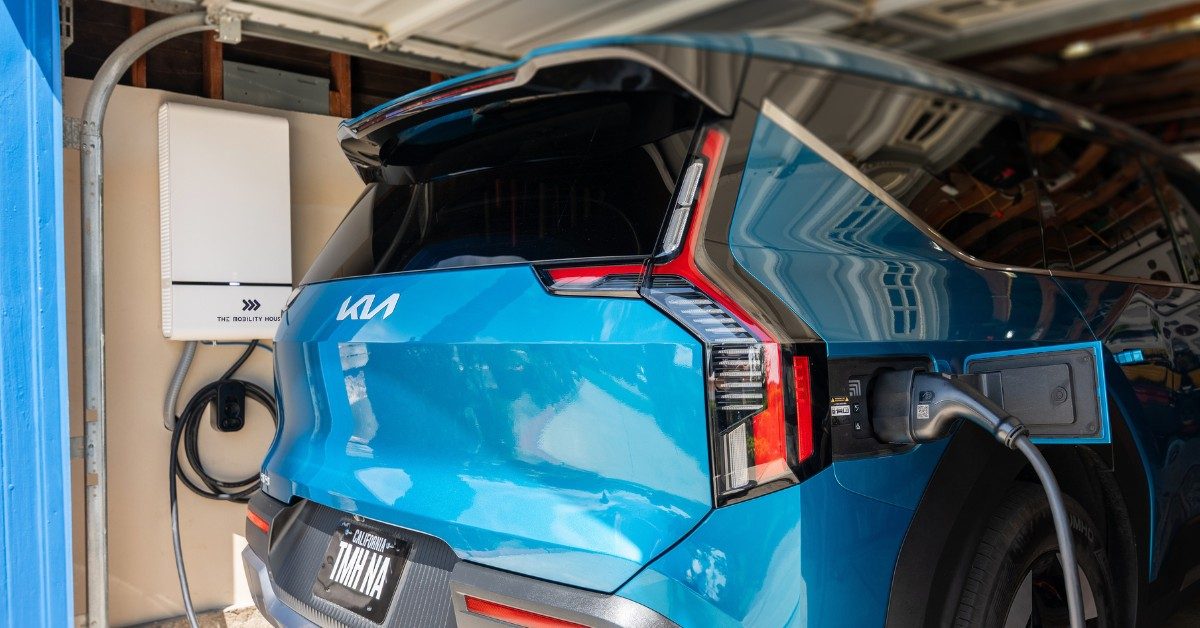
Massachusetts is launching a program that will allow some electric vehicle owners to earn money by sending stored battery power back to the grid during periods of high demand. The initiative, set to roll out in the coming months, turns parked EVs into mobile power sources that can help stabilize the local electricity network. Participating drivers will receive incentives each time their car discharges electricity at peak times, effectively turning their vehicle into a small, flexible power plant.
This vehicle-to-grid (V2G) technology is still in its early stages globally, but it signals a future where EV ownership offers more than just fuel savings. In Saudi Arabia, where the EV market is expanding rapidly, the concept is highly relevant. Several models already sold locally—such as the Hyundai Ioniq 5, Kia EV6, and the upcoming Lucid Air—are V2G-capable or have bi-directional charging hardware. These vehicles could theoretically participate in similar programs if Saudi utilities ever introduce demand-response schemes.
For Saudi buyers, the key point to watch is whether their chosen EV supports bi-directional charging, as not all electric cars do. Brands like Nissan and Ford offer it on certain trims, while others limit the feature to vehicle-to-load (V2L) only, which powers appliances but cannot send electricity back to the grid. As the Kingdom pushes toward its Vision 2030 renewable energy targets, programs mimicking Massachusetts' model could become a valuable perk—but only for owners whose cars are equipped for the job.
For now, the Massachusetts announcement provides a glimpse of what might become standard in Saudi Arabia. Shoppers considering an EV should check the technical specifications for V2G readiness, as that feature could one day offset charging costs and even earn income. While no local program exists yet, the infrastructure and compatible vehicles are already arriving, making it a smart consideration for forward-looking buyers.




Comments (0)
No comments yet. Be the first to comment.