
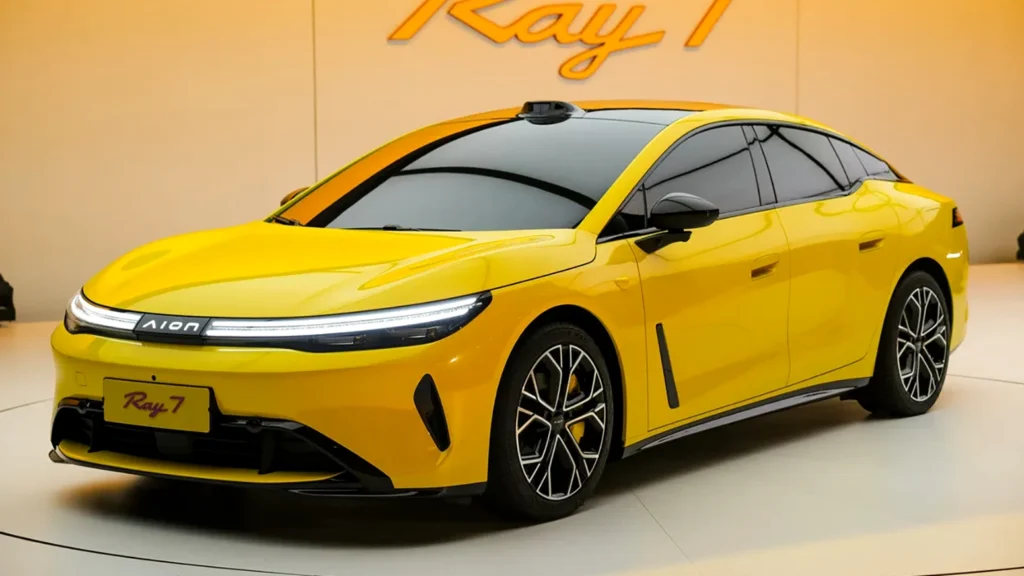
GAC Aion has unveiled its new Ray 7 sedan, and the headline news is that the car carries advanced autonomous driving hardware borrowed from the world of Level 4 robotaxis. Specifically, the vehicle is equipped with the same kind of sensor array and computing platform used by WeRide, the company best known for operating fully driverless taxis. It is a striking engineering choice, but one with an immediate catch: the production car cannot actually use this technology to its full potential.
The reason is simple. Level 4 autonomy allows a vehicle to drive itself without human intervention under certain conditions, but real-world regulations and liability requirements mean the Ray 7 will ship with a much more limited driver-assistance package. Drivers will still need to keep their hands on the wheel and their eyes on the road. In essence, the car is carrying a race engine but is legally restricted to city speeds. The hardware is future-proof, but the software is deliberately restrained.

For Saudi buyers, the Ray 7 enters a fast-growing segment of electric executive sedans. Its most obvious rivals in the Kingdom include the Tesla Model 3, the Hyundai Ioniq 6, and the BYD Seal, all of which compete on range, interior tech, and performance. The Ray 7 differentiates itself with this impressive autonomous hardware suite, but shoppers should weigh whether that distinction matters given that it is largely dormant today.
What should prospective owners watch for? First, the handling of assisted-driving features in Saudi conditions, such as extreme heat, dusty winds, and unusual road markings. Second, whether GAC Aion commits to regular over-the-air updates that could gradually unlock more of the hardware's capability. Third, after-sales support and servicing availability, which remains a deciding factor for newer Chinese



Comments (0)
No comments yet. Be the first to comment.