
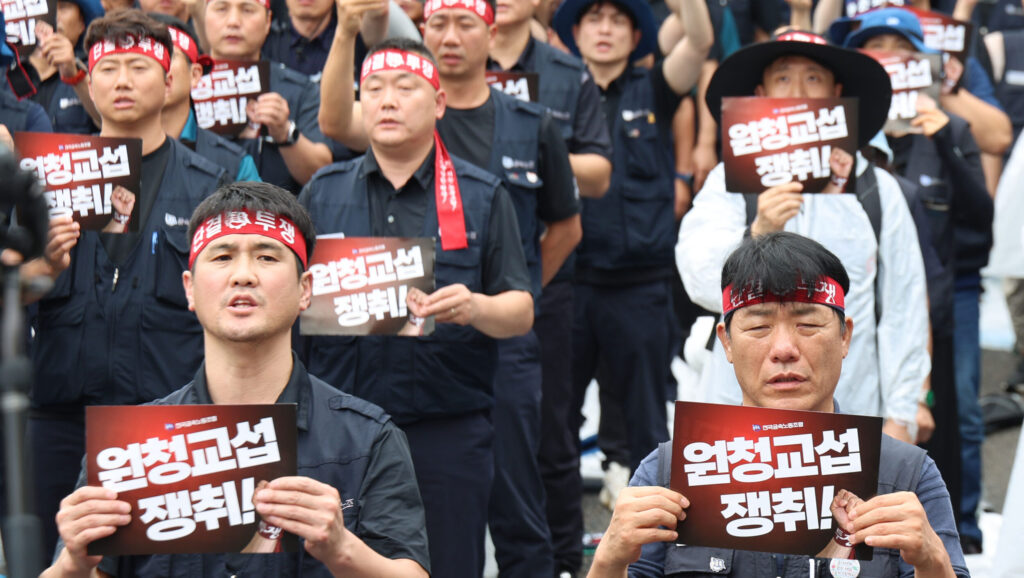
Hyundai workers in South Korea have walked off the job for the first time in a decade, marking a dramatic escalation in an ongoing labor dispute. The strike, which also involves employees at sister brand Kia, comes after negotiations over wages and working conditions broke down. A key sticking point is the growing use of robots and automated systems on the factory floor, with workers demanding guarantees that technology will not replace human jobs or chip away at their earning potential.
For Saudi buyers, the work stoppage could have a ripple effect on showroom inventories. Hyundai and Kia are heavily reliant on their South Korean production base for many of the crossover and sedan models that are popular in the Kingdom. If the strike drags on, dealers may face slower replenishment of stock, and customers waiting for specific trim levels or colors might see longer delivery timelines.

Both brands occupy a strong position in Saudi Arabia’s fiercely competitive mid-size segment, where they square off against well-entrenched Japanese rivals such as Toyota and Nissan, as well as American contenders. Hyundai’s and Kia’s models have gained traction with local buyers thanks to their sharp styling, long warranty coverage, and strong value-for-money reputation. Any supply disruption could push some customers to explore those competing showrooms instead.

Shoppers should keep a close eye on local dealer announcements and act quickly if they see their preferred model in stock. It would also be wise to ask about delivery dates in writing before committing to a purchase. Meanwhile, price pressure could emerge if inventories tighten, though no figures have been confirmed yet. The strike also highlights a broader industry trend: as automation spreads across global car factories, labor tensions are likely to become more common.
The walkout is a reminder that even the most modern vehicle production lines still depend on human hands. For now, the strike appears contained, but its outcome will be watched closely by dealers and buyers alike. If history is any guide, a swift resolution is possible—yet this time, the debate over robots makes the path forward less certain. For Saudi consumers, the best course is to stay informed and flexible with their purchasing plans.



Comments (0)
No comments yet. Be the first to comment.