
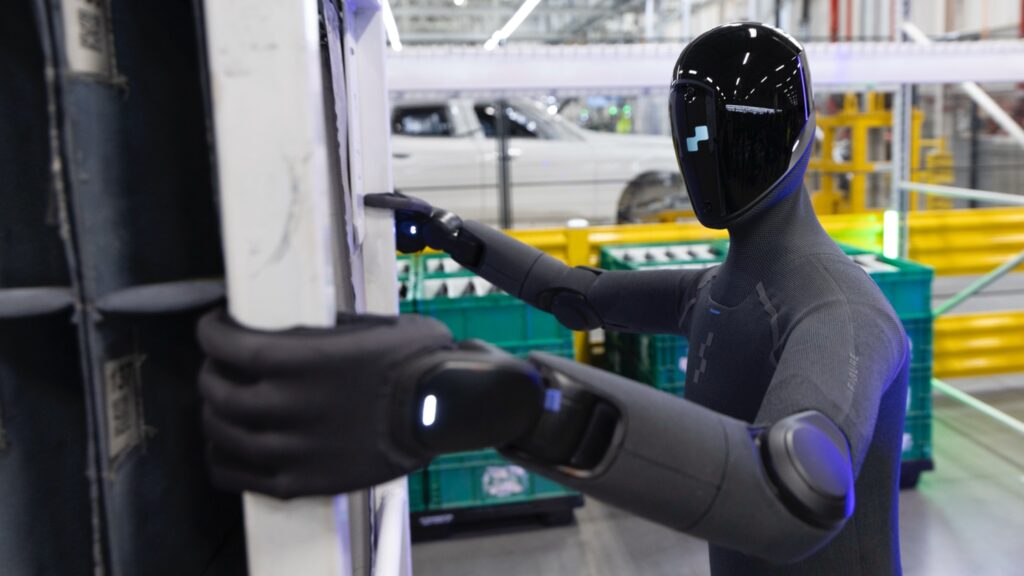
Humanoid robots are beginning to clock in at some of the world's biggest car factories, but they are not ready to take over the assembly line just yet. BMW, Hyundai, Mercedes, and Tesla have all been exploring the use of two-legged, human-shaped machines to handle repetitive or physically demanding tasks on the plant floor. While the idea of walking, talking robotic coworkers sounds futuristic, early deployments show that these machines are still noticeably slower than a skilled human technician working at full pace.
The appeal is clear: robots do not tire, they do not call in sick, and they can work around the clock without breaks. Automakers hope that humanoids can eventually fill labor gaps and take over jobs that are monotonous or hard on the body. Yet some industry experts remain skeptical, questioning whether the complexity of designing, maintaining, and programming these machines is actually worth the trouble when traditional industrial robots already do many of these jobs faster and more reliably.
For Saudi buyers, this matters less about the cars themselves and more about the companies building them. BMW, Mercedes, Hyundai, and Tesla all have a strong presence in the Kingdom's showrooms, and this technology is focused on manufacturing efficiency rather than vehicle features. Shoppers in Riyadh or Jeddah should not expect humanoid robots to change the driving experience, the warranty, or the pricing of a new SUV any time soon. The cost savings from automation, if they ever arrive, take years to trickle down to the showroom floor.
What buyers should watch for instead is quality consistency. As automakers experiment with new assembly methods, there is always a brief adjustment period that can affect fit and finish. The good news is that every car sold in Saudi Arabia still goes through rigorous inspection and carries a manufacturer warranty, so the risk to the consumer remains minimal.
The broader takeaway is that this technology is still maturing. Humans remain faster, more flexible, and better at adapting to unexpected problems on the line. For now, the walking robots are a promising experiment, not a revolution. But with the biggest names in the


Comments (0)
No comments yet. Be the first to comment.