

Tesla has begun pushing out version 15 of its "Full Self-Driving" software, and the company's own list of improvements reads like a confession of where the system has struggled most: reading road signs, spotting potholes, and managing speed in school zones. Tesla also says the update delivers what it describes as 25 times better handling of safety-critical cases, and it adds a new live visualisation for occupants.
Those are not glamorous upgrades, but they are the ones that matter in daily use. Sign recognition and school-zone speed control are the situations where a driver-assistance system most often feels unpredictable, and pothole detection is a genuine concern on roads that see heavy traffic and wide temperature swings. Framing the release around these gaps suggests Tesla is now refining the system's behaviour in ordinary, messy conditions rather than chasing headline demonstrations.

For Saudi buyers, the important caveat is availability. Tesla's advanced driver-assistance features are rolled out market by market and depend on local regulation, so a version number announced abroad does not automatically translate into functionality on a car delivered here. The Kingdom is still building out its framework for autonomous and semi-autonomous vehicles, and buyers should confirm with the dealer exactly which features are active, which are merely prepared for later, and whether any subscription applies.
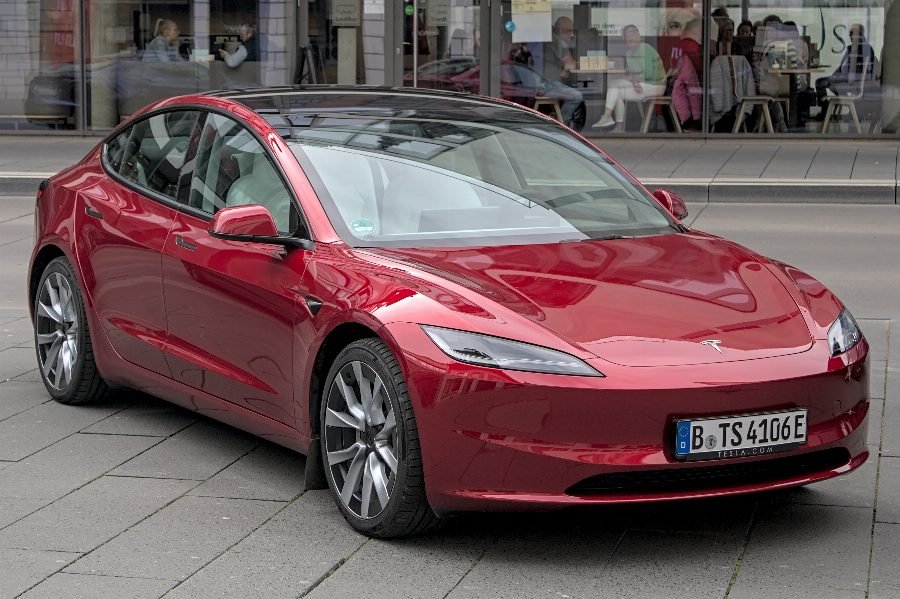
The competitive picture is crowded. Lucid, now assembling cars in Saudi Arabia, markets sophisticated driver-assistance suites, while BYD, Polestar, Mercedes-Benz and BMW all sell electrified models here with increasingly capable highway and parking assistance. Chinese brands in particular are packing advanced features into mainstream price brackets, which puts pressure on premium players to justify their premiums with software that actually works locally.
Shoppers should also keep the terminology straight. "Full Self-Driving" remains a supervised driver-assistance product, not a self-driving car, and the person behind the wheel stays responsible at all times. Before signing, ask how often software updates arrive in Saudi Arabia, whether local maps and speed-limit data are supported, and what the warranty says about over-the-air changes. Test the features on roads you actually drive rather than accepting a demonstration route.



Comments (0)
No comments yet. Be the first to comment.