
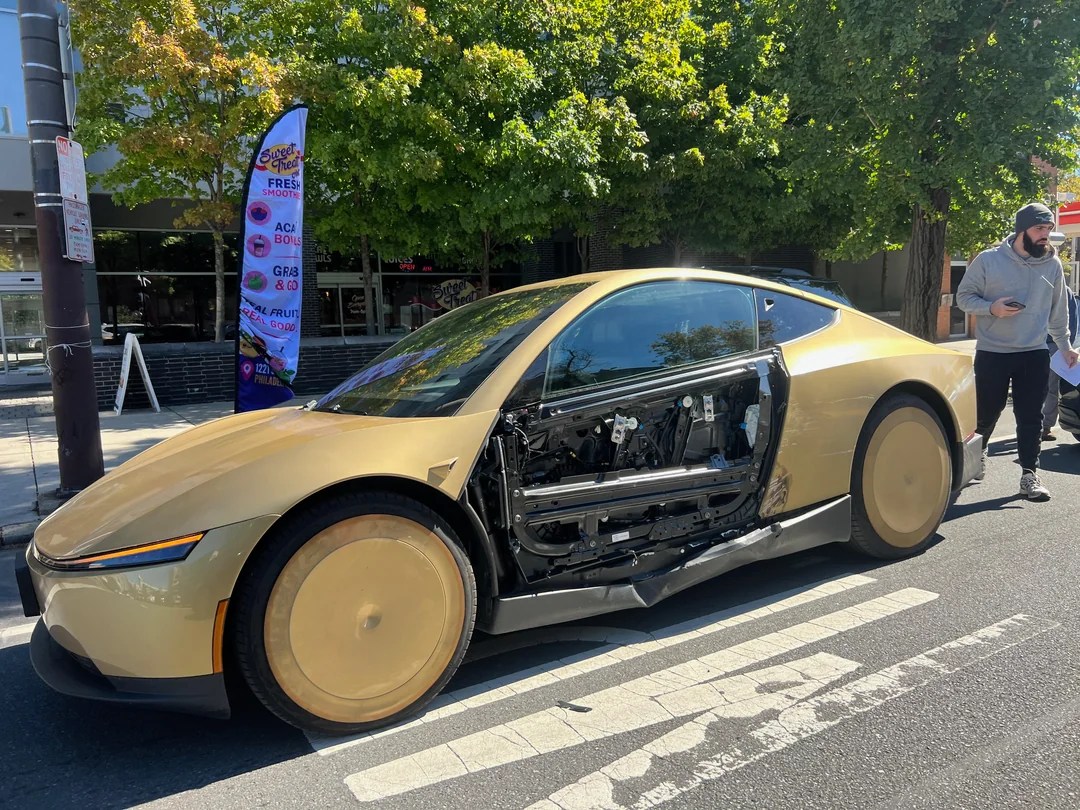
A Tesla Cybercab was involved in a collision in Philadelphia this week, and photos from the scene show the vehicle ended up without the entire outer skin of its driver-side door. The panel appears to have come away from the car completely, leaving the door structure exposed. Tesla has not offered a public explanation of what happened.
Several important details remain unclear. It is not known who was at fault, and there is no confirmation of whether Tesla's self-driving software was operating the vehicle at the time. Tesla also does not hold a permit to run autonomous vehicles on Pennsylvania roads, which limits how much this single incident can tell us about the company's regulatory standing. Reports like this are best read as one data point, not a verdict.

The Cybercab is not a car Saudi shoppers can walk into a showroom and buy. It is Tesla's purpose-built robotaxi concept, designed around two seats and an interior without conventional controls, aimed at commercial ride-hailing rather than private ownership. Its "segment" is essentially the autonomous mobility business, where it would sit against other driverless taxi platforms rather than against family cars.
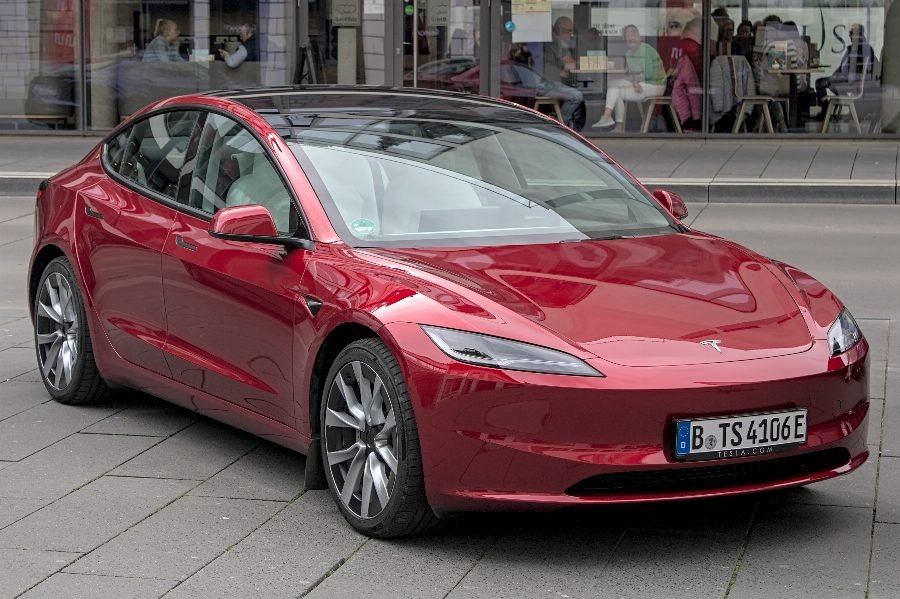
For buyers in the Kingdom, the more practical question is what this means for the electric vehicles actually on sale. Tesla's Model 3 and Model Y compete here with offerings from Lucid, which builds cars in Saudi Arabia, along with Hyundai, BYD, Polestar and others. A robotaxi mishap abroad does not change the specs, warranty or pricing of those models.
What shoppers should watch instead is whether Tesla signals any intention to bring autonomous ride-hailing to Saudi Arabia, and how regulators here would approach permits and liability. Also worth tracking is how easily body panels and parts can be sourced locally, since repair costs and parts availability matter far more to day-to-day ownership than a headline from Philadelphia.
Comments (0)
No comments yet. Be the first to comment.