
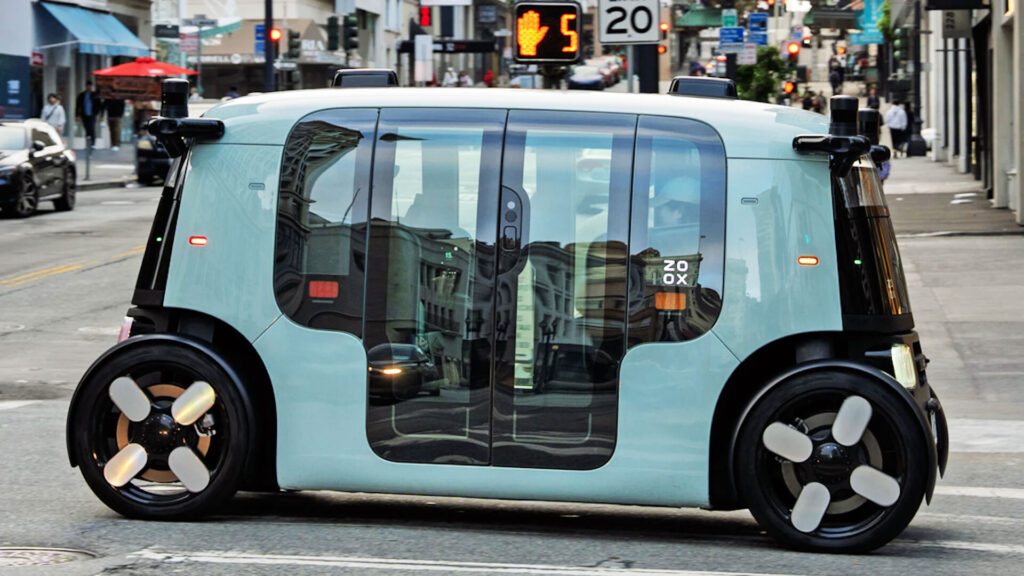
Amazon’s autonomous vehicle unit, Zoox, has cleared a major regulatory hurdle in the United States. The company has received the first-ever commercial exemption from the National Highway Traffic Safety Administration for a purpose-built robotaxi, meaning it can now charge passengers for rides in a car that has no steering wheel or pedals. This is a significant milestone not just for Amazon, but for the broader autonomous vehicle industry, as it moves from test programs to a paid service.
For Saudi buyers and mobility enthusiasts, this news marks a step closer to a future where cars are less about driving and more about being transported. The Zoox vehicle is unlike anything on sale today: it is designed from the ground up as a driverless shuttle, with no traditional controls and a cabin configured for passengers to face each other. That puts it in a different category from the driver-assistance systems found in conventional luxury sedans and SUVs currently sold in the Kingdom.
In the Saudi market, the closest comparison is not a specific car model but the emerging ride-hailing and smart-mobility segment. Global players like Waymo and Cruise are already testing similar services elsewhere, and regional projects such as the ambitious smart-city plans in NEOM are pushing for autonomous transport. That means Zoox’s approval could influence how regulators and consumers here view the safety and viability of fully driverless vehicles.
What Saudi shoppers should watch for is how these vehicles will be adapted to local conditions. Extreme heat, sand, and unique driving habits are challenges that robotaxis must overcome, and local regulations are still being shaped. While no timelines or prices have been announced for any Gulf launch, the exemption sets a precedent that other manufacturers may follow.
For now, this news is mostly a signal of momentum rather than an immediate purchase option. It tells Saudi consumers that the era of the driverless car is getting closer, and that the next significant shift in mobility may arrive faster than many expected. Until then, traditional cars remain the safe choice, but the horizon is clearly changing.




Comments (0)
No comments yet. Be the first to comment.