
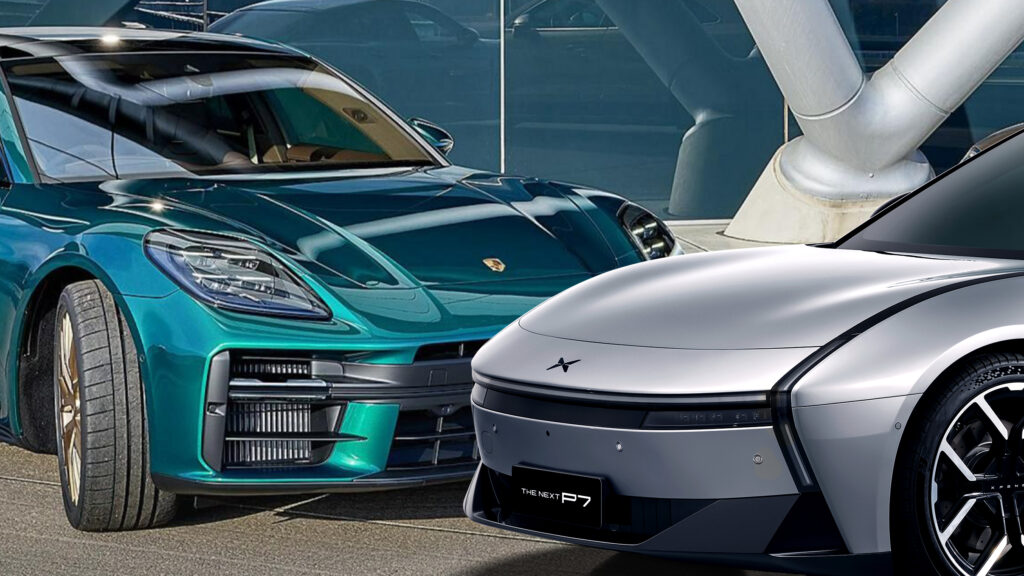
Porsche is breaking away from the Volkswagen Group’s emissions pool and will instead partner with a Chinese brand to balance its carbon footprint. The move comes as sales of the Taycan electric sedan have slowed, pushing the company’s average fleet emissions higher as it tries to meet stricter European quotas before 2027. By teaming up with a Chinese automaker, Porsche can pool its fleet with a manufacturer that produces a large share of zero-emission vehicles, effectively lowering its reported average without needing to sell more electric cars on its own.
This is a regulatory decision rather than a product announcement, but it underscores how serious Porsche is about avoiding fines. European emissions rules penalize automakers whose fleets exceed CO2 limits, and a sluggish Taycan has made that target harder to hit. The old arrangement with VW no longer gives Porsche enough flexibility, prompting the switch to a partner with a stronger mix of EVs.

For Saudi Arabian buyers, the immediate impact is minimal. Porsche models sold in the Kingdom are unlikely to change in spec or availability because of this compliance move. Saudi Arabia follows different emission standards, and the local lineup is driven more by global production cycles than by European fleet calculations. Still, the shift hints at where Porsche is heading globally, and that could eventually influence which models reach the region.

In the luxury electric segment, Porsche competes with the likes of the Audi e-tron GT, Mercedes-AMG EQS, and BMW i7. The Taycan holds its own on driving dynamics, but the sales slump in Europe raises questions about its mid-cycle freshness. For Saudi buyers weighing a luxury EV, the Taycan remains a strong contender, though the brand’s new partnership might bring future battery or software technology from China — a factor worth watching for reliability and feature updates.
Shoppers should also keep an eye on how Porsche manages the transition to its next electric generation. A partnership aimed solely at emissions accounting does not automatically mean cheaper or more advanced cars locally. But if the collaboration expands beyond paperwork, it could lead to faster-moving infotainment systems or more efficient drivetrains in future models. Until then, Saudi customers can expect business as usual, with the familiar mix of performance and prestige that defines the brand.


التعليقات (0)
لا توجد تعليقات بعد. كن أول من يعلّق.