
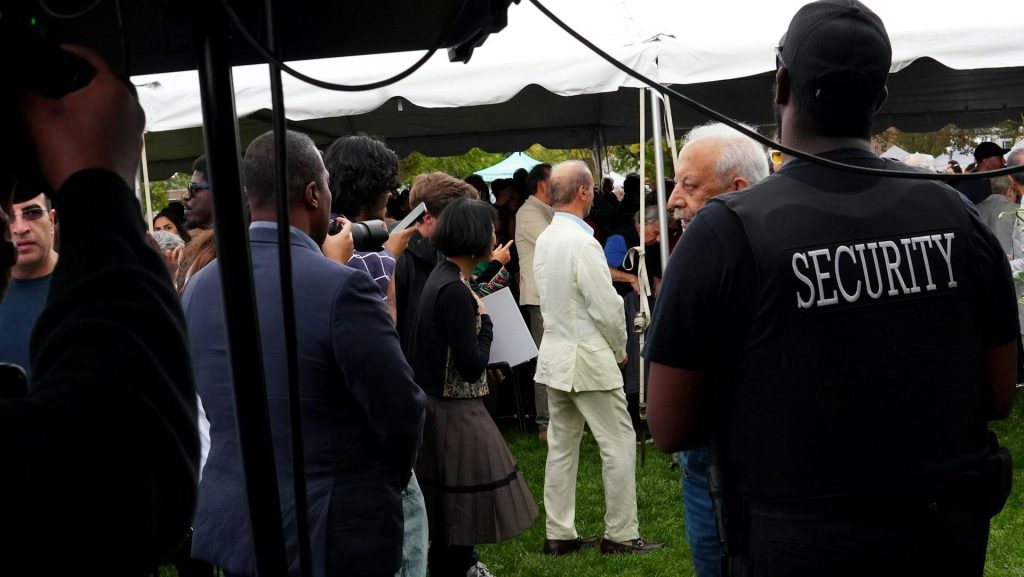
Dubai hosts thousands of events annually — corporate launches, exhibitions at the World Trade Centre, weddings at beachfront resorts, concerts, and community festivals. What first-time organisers consistently underestimate is that security isn’t a late-stage line item. It shapes venue layout, permit approval, and staffing budget from the beginning.
Security Starts at the Permit Stage
Event permits in Dubai frequently require a documented security plan specifying guard numbers relative to expected attendance, evacuation routes, medical provision, and the licensed provider engaged. Organisers who address this two weeks out often find themselves scrambling, because a credible provider needs lead time to assess the venue and assign appropriate personnel.
Engage security when you confirm the venue, not after tickets are sold.
Crowd Density, Not Headcount
Attendance figures alone are misleading. A 500-person seated gala and a 500-person standing outdoor concert have entirely different risk profiles. Density, movement patterns, alcohol service, VIP presence, and whether minors attend all change the calculation.
Planners look at ingress and egress bottlenecks, sightline coverage across the floor including behind staging and sponsor activations, and surge capacity — how quickly personnel can be repositioned if something develops at one point.
The Roles Involved
Event security isn’t a single job. Well-staffed events separate distinct functions:
| Function | Responsibility |
| Access control | Entry points, credential checks, bag screening |
| Floor officers | Circulation, medical spotting, conflict intervention |
| Close protection | Assigned to specific VIPs or dignitaries |
| Control room | CCTV monitoring, radio coordination |
| Supervisory | Deployment decisions, authority liaison |
Access control officers have the highest guest interaction and therefore need the strongest communication skills — physical presence matters less than the ability to explain a policy without escalating it.
Heat Is a Security Issue
This is specific to the UAE and routinely underestimated. Outdoor events between May and September carry real heat-related medical risk, and security staff are usually first to spot someone in distress.
Officers themselves need rotation, shade, and hydration. A dehydrated guard at hour six isn’t providing security. Any competent local provider builds heat management into the staffing plan without being asked — if they don’t raise it, that’s informative.
Language and De-escalation
Dubai’s crowds are extraordinarily diverse. Officers who can de-escalate across language and cultural lines resolve situations that officers relying on authority alone will escalate. Ask prospective providers about de-escalation training and the language coverage of the specific team they’d assign.
Authority Coordination
For larger events, providers coordinate with Dubai Police, Civil Defence, and ambulance services. Establish these lines before the event rather than during an incident. Your provider should be able to state precisely who contacts whom, for what, and how quickly.
When comparing event security services, this coordination capability is a meaningful differentiator — providers with established relationships and prior venue experience mobilise faster when it matters.
Screening Without Creating a Queue
Bag checks and credential verification are where guest experience and security most obviously collide. Screen too slowly and you create a crowd outside the venue — which is itself a security problem, and in summer a medical one. Screen too fast and the process becomes theatre.
The solution is usually lanes rather than intensity: more entry points, staffed adequately, with clear signage telling guests what is and isn’t permitted before they reach the front. Publishing prohibited items in advance removes most friction at the door, because the arguments happen online rather than in a queue.
After the Doors Close
A surprising share of incidents occur after the official end — intoxicated guests in car parks, equipment theft during breakdown, lost property disputes. Contract coverage past the stated end time and keep personnel on site until the venue is genuinely clear.
Communication Discipline
On any event above a modest size, radio protocol determines how well the team functions. Channels should be assigned before the day, call signs agreed, and everyone briefed on what constitutes an escalation versus a routine update. Events where every officer talks on one channel become unusable the moment something happens.
Organisers should sit inside that structure rather than beside it. Nominate one person on your side as the security point of contact and give them a radio. Decisions made through three intermediaries arrive too late to matter.
Common Planning Errors
- Budgeting from headcount alone without accounting for venue complexity or event type
- Booking late, leaving no time for venue assessment
- Omitting breakdown coverage, exposing equipment during load-out
- Treating VIP protection as part of general staffing — it’s a separate function requiring separate personnel
- No written debrief, meaning nothing is learned for the next event
Questions to Ask Before Signing
- Are all assigned officers currently licensed for security work in Dubai?
- Who is the on-site supervisor, and can I meet them beforehand?
- What guard-to-attendee ratio do you recommend, and how did you calculate it?
- Have you worked this specific venue before?
- What does post-event reporting include?
That last one is revealing. A provider who delivers a written debrief is treating the engagement professionally. One who doesn’t is treating it as shifts filled.
Frequently Asked Questions
How many security staff does an event need? There’s no universal ratio. Requirements depend on attendance, venue configuration, whether alcohol is served, VIP presence, and whether the event is seated or standing. A provider should justify their recommendation rather than quoting a generic figure.
How far in advance should event security be booked? Four to six weeks for medium events allows venue assessment and permit documentation. Large-scale events warrant several months.
Do security staff at events need SIRA licensing? Yes. Anyone performing security duties in Dubai requires valid licensing, including temporary event staff.
Can the venue’s existing security be used? Venue security typically covers the building, not your event. Most venues require organisers to contract dedicated event security in addition.
Is close protection needed if VIPs attend? If a guest has a genuinely elevated profile, yes — and it should be a dedicated assignment. General floor officers cannot simultaneously manage a crowd and protect an individual.
What insurance is required? Event liability insurance is typically required for permitting. Confirm your security provider carries their own coverage as well.
The Practical Takeaway
Event security done well is invisible. Guests remember the show, not the officers at the door. Reaching invisible takes planning that begins months earlier — venue assessment, realistic staffing, authority coordination, and a provider who treats the debrief as seriously as the deployment.